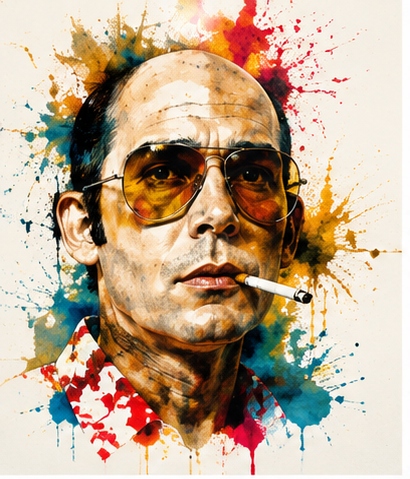
Hunter S. Thompson did not cover stories. He climbed inside them, slammed the door, and reported back from the wreckage. He rode a year with the Hell's Angels and took the beating that came with the last chapter. He covered a horse race in his hometown and came back with something so feral his editor printed it raw — and a friend wrote to tell him he'd broken through to something new. The word that stuck was gonzo.
What gonzo meant, underneath the legend and the hardware, was simple and radical: the reporter is part of the story, objectivity is a polite fiction, and the truth sometimes requires a first person willing to get hurt. He ran for sheriff of Pitkin County on the Freak Power ticket and nearly won. He covered a presidential campaign like a hostage situation. He filed late, fought every editor he ever had, and wrote sentences that still hum like a live wire fifty years on.
He spent his last decades at Owl Farm in Woody Creek, Colorado — writing, shooting, feuding, and holding the fort. In February 2005 he ended things on his own terms at his own kitchen table, and that August his ashes were fired out of a cannon he designed himself, off a 153-foot tower shaped like the gonzo fist, paid for by Johnny Depp. Even the exit was a dispatch.
This site is not affiliated with his estate. It is one writer's tribute, kept the only way that makes sense — as a diary, filed from inside the story.